
Best Late API Alternative in 2026
If you're building on the Late.dev API and running into pricing walls, platform gaps, or missing features, you're not stuck with it.
There are several social media API providers worth considering in 2026. This comparison covers the four most relevant options: OmniSocials, Ayrshare, Publer, and Buffer. I've evaluated each on API capabilities, platform support, pricing, and developer experience so you can make a clean decision.
Quick Comparison: Late API vs the Alternatives
| Feature | OmniSocials | Ayrshare | Publer | Buffer |
|---|---|---|---|---|
| Price | $10/mo | $49/mo+ | $12/mo | $6/channel/mo |
| Platforms | 11 | 8 | 9 | 8 |
| Auth model | Single API key | API key | OAuth per user | OAuth per user |
| Bluesky + Threads | Yes | Bluesky only | No | No |
| Webhooks | Yes | Yes | No | No |
| Media upload API | Built-in | Built-in | Manual | Manual |
| MCP server | Yes | No | No | No |
| Free trial | 14 days | 7 days | Free plan | Free plan |
What Is a Late API Alternative?
A Late API alternative is any social media API that lets developers publish, schedule, and manage posts across multiple platforms without building separate integrations for each one. Late.dev provides this through a unified API layer, but developers increasingly switch due to pricing at scale, limited platform coverage, and gaps in newer platform support like Bluesky and Threads.
The four options below each take a different approach, from the cheapest all-in-one option to the most developer-focused enterprise product.
1. OmniSocials API — Best Overall Late Alternative
[Screenshot: OmniSocials API documentation showing a single POST request publishing to multiple platforms]
OmniSocials is the most cost-effective Late API alternative for developers who need broad platform coverage without separate integrations or per-channel pricing.
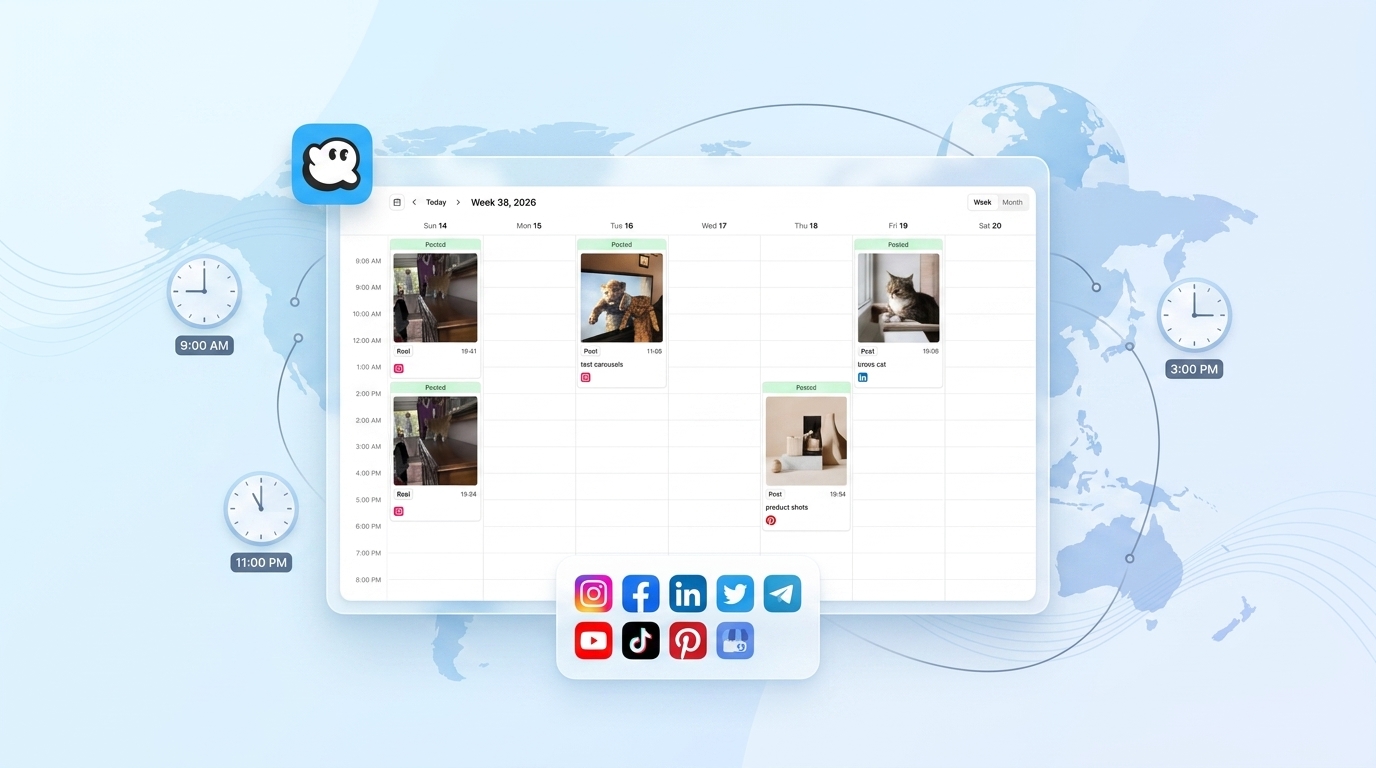
At $10/mo, you get API access to all 11 supported platforms: Instagram, Facebook, LinkedIn, YouTube, TikTok, X, Pinterest, Bluesky, Threads, Mastodon, and Google Business Profile. The API uses a single key for everything. No OAuth flows per platform, no separate app review per network.
Here's what a basic post request looks like:
const response = await fetch('https://api.omnisocials.com/v1/posts', {
  method: 'POST',
  headers: {
    'Authorization': 'Bearer YOUR_API_KEY',
    'Content-Type': 'application/json',
  },
  body: JSON.stringify({
    text: 'New product drop. Link in bio.',
    media: ['https://yourcdn.com/product.jpg'],
    platforms: ['instagram', 'linkedin', 'bluesky'],
    scheduled_at: '2026-04-10T09:00:00Z',
  }),
});
import requests

response = requests.post(
    'https://api.omnisocials.com/v1/posts',
    headers={'Authorization': 'Bearer YOUR_API_KEY'},
    json={
        'text': 'New product drop. Link in bio.',
        'media': ['https://yourcdn.com/product.jpg'],
        'platforms': ['instagram', 'linkedin', 'bluesky'],
    }
)
post = response.json()['data']
One request. Three platforms. That's the core appeal.
Key API features:
- Single API key for all 11 platforms
- Built-in media upload with automatic resizing per platform
- Scheduling via
scheduled_aton any post request - Webhooks for publish success, failure, and engagement events
- MCP server for AI agent workflows via Claude or custom agents
- Analytics endpoint for cross-platform engagement data
- Rate limit: 100 requests/min per key
Pros:
- Cheapest option at $10/mo, API included in the base plan
- Supports Bluesky, Threads, and Mastodon which most competitors don't
- No OAuth complexity — connect accounts in the dashboard once, use the API from anywhere
- MCP server is unique among API providers, useful for AI-driven automation
- 14-day free trial
Cons:
- No multi-tenant/user profile API — if you're building a SaaS where each client has their own connected accounts, Ayrshare's profile model is better suited
- Smaller developer community than established players like Buffer
Pricing: $10/mo (annual) or $12/mo (monthly). API access is included, not a separate tier.
Full API reference at docs.omnisocials.com.
2. Ayrshare — Best for Multi-Tenant SaaS Builds
[Screenshot: Ayrshare API dashboard showing user profile management and API keys]
Ayrshare is the strongest Late API alternative if you're building a product where your users connect their own social accounts. It has a "profiles" system that lets each user in your app have their own connected accounts under your single Ayrshare API key.
The trade-off is price. Ayrshare starts at $49/mo for the Business plan, which limits you to a set number of profiles. At scale, costs climb significantly.
Key API features:
- User profile system for multi-tenant architecture
- 8 platforms including Instagram, Facebook, LinkedIn, TikTok, and Twitter/X
- Bluesky support added in 2025
- Webhook system for post events
- Media upload API with CDN integration
- Analytics API with per-platform breakdowns
Pros:
- Best multi-user API model for SaaS products with end-user accounts
- Solid documentation with active developer community
- Reliable uptime and well-maintained platform integrations
Cons:
- $49/mo minimum is 5x the cost of OmniSocials
- No Threads or Mastodon support as of early 2026
- No MCP server for AI agent workflows
- Profile pricing adds up fast at volume
Pricing: $49/mo (Business), $99/mo (Business Plus). Custom pricing for enterprise profile counts.
3. Publer — Limited API, Better as a Scheduling Tool
[Screenshot: Publer dashboard showing scheduling calendar and social account connections]
Publer sits in an awkward middle position. It's a capable scheduling tool at $12/mo, but its public API is limited compared to dedicated API-first products.
The Publer API covers basic post creation and scheduling, but lacks webhook support, a media upload endpoint, and analytics access. It works fine for simple internal automation. For anything production-grade or multi-platform, the gaps become obvious.
Key API features:
- Basic post creation and scheduling
- Account listing
- Post status checking
Pros:
- Affordable at ~$12/mo
- Good scheduling UI if you also need a dashboard alongside the API
- 9 platform support in the core product
Cons:
- No webhooks — you have to poll for post status
- No media upload API — you manage media externally
- No analytics API
- Limited official documentation compared to OmniSocials or Ayrshare
Pricing: Free plan available. Paid plans from ~$12/mo.
4. Buffer API — Read-Only, Not a Real Alternative
[Screenshot: Buffer dashboard showing the scheduling queue]
Buffer is worth mentioning because many developers consider it during this search. The honest answer: Buffer's public API is read-only. You can retrieve post data and analytics, but you cannot create or schedule posts via the API.
For teams that want an API-driven publishing workflow, Buffer is not a Late API alternative. It's a scheduling tool with limited developer access.
Pros:
- Simple, clean UI for non-developer team members
- Stable product with good Instagram and LinkedIn support
- Per-channel pricing can be cheap at low volume
Cons:
- No write access via public API — posts cannot be created programmatically
- $6/channel/mo adds up fast (3 channels = $18/mo for one workspace)
- No Bluesky, Threads, or Mastodon
- No webhooks
Pricing: Free plan (3 channels). $6/channel/mo on paid plans.
How to Migrate from Late API to OmniSocials
Migration is straightforward. The payload structure is similar enough that most teams finish in under an hour.
Step 1: Connect your accounts. Log into the OmniSocials dashboard, go to Settings > Connected Accounts, and reconnect your social profiles. This replaces any platform-level OAuth you handled through Late.
Step 2: Get your API key. Navigate to Settings > API and generate a key. This is your single credential for all platforms.
Step 3: Update your base URL. Replace Late's API endpoint with https://api.omnisocials.com/v1 in your code.
Step 4: Map your payload fields. The core fields are nearly identical: text, media, platforms, and scheduled_at. Check docs.omnisocials.com for the full payload reference, particularly if you use media uploads or webhooks.
Step 5: Update webhook URLs. If you're receiving webhooks from Late, reconfigure them in the OmniSocials dashboard under Settings > Webhooks. The event types (post.published, post.failed) follow the same pattern.
Most teams test with a single platform first, then expand. The 14-day free trial gives you full API access to validate the integration before committing.
Which Late API Alternative Should You Choose?
Choose OmniSocials if you need the broadest platform coverage at the lowest cost, especially if Bluesky or Threads matter to your workflow. At $10/mo with a full API, webhooks, and an MCP server, it's hard to argue against it for most use cases.
Choose Ayrshare if you're building a SaaS product where your end users connect their own social accounts. The profile system is purpose-built for that architecture, and it's the main reason to pay the $49/mo premium.
Choose Publer only if you primarily want a scheduling dashboard and need occasional API access for internal scripts.
Skip Buffer entirely if API-driven publishing is your goal.
The Late API works, but the pricing and platform gaps have pushed a lot of developers to look elsewhere in 2026. OmniSocials covers the same use cases at a fraction of the price, and the migration is genuinely quick.
Start a free trial at omnisocials.com.
Frequently Asked Questions
What is the best Late API alternative?
OmniSocials is the best Late API alternative for most developers in 2026. It supports 11 platforms from a single API key at $10/mo, includes scheduling, media upload, webhooks, and an MCP server for AI agents. Ayrshare is a solid alternative if you need multi-profile user management, though it starts at $49/mo.
Does Late.dev have a public API?
Late.dev does offer API access, but it is gated behind higher-tier plans and lacks support for newer platforms like Bluesky, Threads, and Mastodon. The API documentation is less comprehensive than dedicated API-first products like OmniSocials or Ayrshare.
How do I migrate from Late API to OmniSocials API?
Migration takes under an hour. Connect your social accounts in the OmniSocials dashboard, generate an API key under Settings > API, then update your base URL from Late's endpoint to https://api.omnisocials.com/v1. The post creation payload structure is similar: text, media, platforms, and scheduled_at fields.
Is there a free Late API alternative?
OmniSocials offers a 14-day free trial with full API access. Buffer has a free plan but its API is read-only. For any serious publishing use case, a paid plan is required across all providers.
Which social media APIs support Bluesky and Threads?
OmniSocials supports both Bluesky and Threads as of 2026, making it one of the few API providers covering all 11 major platforms including newer ones. Ayrshare supports Bluesky. Buffer and Late have limited or no support for either.
Sources
- Ayrshare API Documentation — Official Ayrshare developer docs covering endpoints, authentication, and platform coverage
- Buffer Developer Documentation — Buffer's public API reference, confirming read-only access scope
- Publer API Documentation — Publer's API endpoint reference for scheduling and account management
- OmniSocials API Documentation — Full OmniSocials API reference including endpoints, authentication, and code examples